



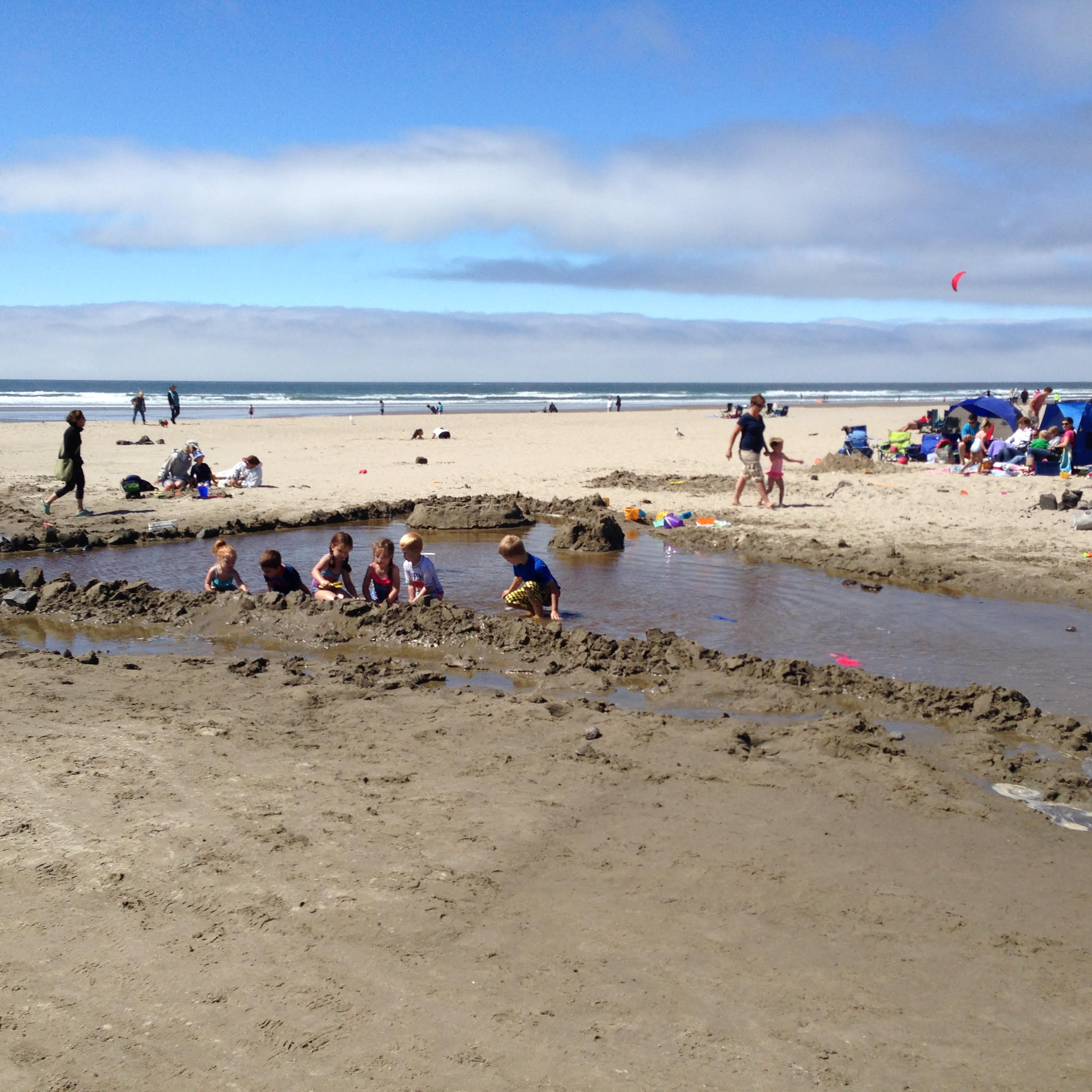
NEDC and the City of Cannon Beach signed a landmark agreement this week, designed to protect Cannon Beach residents, visitors, and the marine ecosystem from dangerously high levels of bacteria in local creeks and beaches.
The agreement resolves a 2025 Clean Water Act lawsuit filed by NEDC, alleging that the City has regularly discharged pollutants, including bacteria and untreated human waste, to local beaches and the Pacific Ocean.
For years, local nonprofits and the Oregon Department of Environmental Quality (DEQ) have collected water quality samples at popular recreation locations in Cannon Beach, including outfalls at Gower Street (near Haystack Rock) and at Tolovana Beach State Recreation Site. On numerous occasions over the past several years, polluted effluent discharged from the City’s stormwater outfalls at these locations—which then flows directly onto popular beaches—has contained elevated levels of the fecal bacteria E. coli and Enterrococcus. Recent DNA source tracking analysis by both NEDC and DEQ has demonstrated that much of this bacteria pollution is of human origin—strongly indicating that untreated human waste from the City’s sewer system is making its way into the stormwater collection system and then discharged to the beach.
In March 2025, NEDC filed a lawsuit against the City to end these discharges, which pose a risk to public health. The Clean Water Act prohibits cities like Cannon Beach from discharging anything except stormwater runoff from their stormwater collection system, and the City’s wastewater discharge permit prohibits “overflows” of untreated sewage except during extreme storm events. The regular presence of untreated human waste in the discharges from the City’s Gower Street and Tolovana stormwater outfalls indicates that these discharges are not composed entirely of stormwater, and are thus unlawful under the Act.
Under today’s agreement to resolve that lawsuit, the City will:
- Hire an independent engineering firm to perform a comprehensive, multi-part investigation to identify the sources of human bacteria being discharged at the Gower St. and Tolovana outfalls;
- Within two years, eliminate all physical conditions within the City’s sewer and stormwater infrastructure that contribute to discharges of human bacteria to those outfalls;
- Provide necessary information and warnings to the public about bacteria issues at the Gower St. and Tolovana outfalls, through additional signage and a new page on the City’s website; and
- Make a $100,000 Supplemental Environmental Project payment to the North Coast Watershed Association, to fund an island habitat restoration project in the lower Ecola Creek Estuary designed to improve watershed health.
Cannon Beach area resident and NEDC member Michael Manzulli said: “In Oregon, the ocean is cold and powerful so our young children play in the coastal streams along the beach that we now know are polluted with human waste and bacteria. NEDC’s lawsuit has compelled the City to finally take urgent action to protect public health. I am elated that we will be able to let our children play in and pets drink from the streams again.”
“We’re thrilled to have resolved this lawsuit, so we can start the important work of fixing these issues once and for all,” said NEDC Executive Director Jonah Sandford. “Along with everyone else who treasures these amazing Cannon Beach recreation sites and the local marine environment, we’re grateful that the City is committed to a thorough investigation of what’s causing these bacteria discharges. And the aggressive timelines in today’s agreement put the City on track to quickly eliminate these discharges—providing real benefits to Cannon Beach residents and everyone else in Oregon who loves these beaches.”
“By requiring the City to eliminate the unlawful bacteria pollution of Cannon Beach, today’s settlement will have real benefits for public health,” said Jamie Saul, one of the attorneys representing NEDC in the case. “The Clean Water Act citizen-suit provision remains a powerful tool for communities eager to protect local water quality.”
NEDC was represented in this case by Jamie Saul of the Wild and Scenic Law Center, and Paul Kampmeier of Kampmeier & Knutsen, PLLC.